How to Charge a Car Battery: A Simple DIY Guide
A flat car battery can leave you stuck at home, at work, or on the side of the road. The good news is that if the battery is still in good condition, you can often recharge it using a suitable battery charger.
In this Nzou Auto Mechanics DIY Tips guide, we explain how to charge a car battery safely, what equipment you need, and what to check if your battery keeps going flat.
What You Need to Charge a Car Battery
Before you start, make sure you have:
- A suitable car battery charger
- Safety gloves
- Safety glasses
- A well-ventilated working area
- Your vehicle’s owner’s manual
- A suitable power source for the charger
Always check that the battery charger is compatible with your vehicle’s battery before connecting it.
Step 1: Park the Vehicle Safely
Park the vehicle on a flat, stable surface and switch off the engine.
Make sure the area is well ventilated, especially if you are charging a conventional lead-acid battery. Keep flames, cigarettes and other sources of ignition away from the battery.
Step 2: Locate the Battery
Open the bonnet and locate the battery.
Some vehicles have the battery in a different location, so check your owner’s manual if you cannot find it.
Before connecting anything, inspect the battery for obvious damage, cracks, leaks or excessive corrosion.
Do not attempt to charge a damaged or leaking battery. Have it inspected by a qualified professional instead.
Step 3: Connect the Battery Charger
With the charger switched off and disconnected from the power supply:
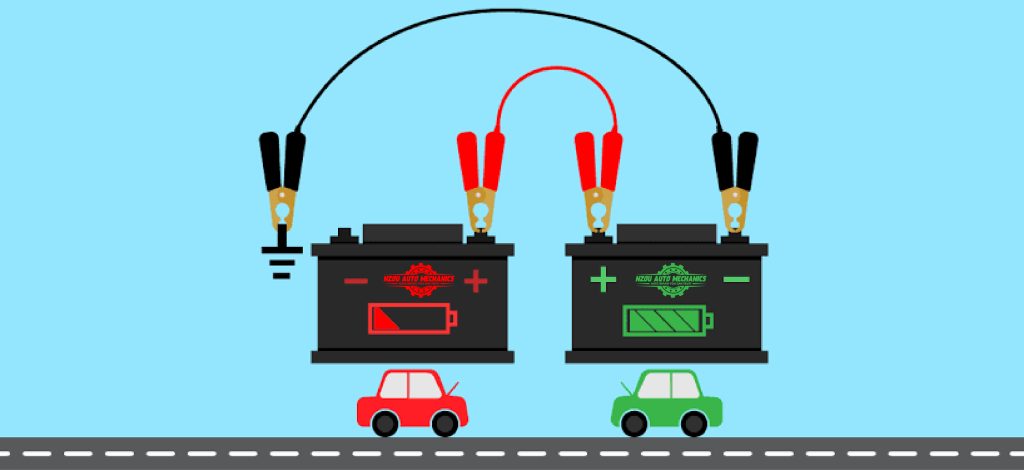
- Connect the positive (+) charger clamp to the battery’s positive (+) terminal.
- Connect the negative (-) charger clamp to the appropriate negative connection as specified by the charger and vehicle manufacturer.
- Make sure the clamps are secure and cannot easily come loose.
Double-check the connections before switching the charger on. Connecting the terminals incorrectly can damage the battery, charger or vehicle.
Step 4: Select the Correct Charging Setting
Turn on the charger and select the appropriate charging mode for your battery.
Some modern chargers automatically detect the battery type and adjust the charging process. Others require you to select settings manually.
If you are unsure which setting to use, check the battery label, vehicle owner’s manual or charger instructions.
Avoid using a charging setting that is not designed for your battery.
Step 5: Allow the Battery to Charge
Leave the charger connected for the amount of time recommended by the charger manufacturer.
Charging time can vary depending on:
- Battery size
- How flat the battery is
- Battery condition
- Charger output
- Battery type
Do not leave the battery charging unattended unless the charger is specifically designed for safe automatic operation and its instructions allow it.
Step 6: Switch Off and Disconnect the Charger
Once the battery has reached the appropriate charge level:
- Switch off the charger.
- Disconnect the charger from the electrical supply.
- Remove the negative clamp.
- Remove the positive clamp.
Keep the clamps from touching each other or other metal surfaces while connected.
Step 7: Start the Vehicle
After charging, try starting the vehicle.
If the engine starts normally, allow it to run as recommended by the vehicle manufacturer. However, remember that simply getting the engine running does not necessarily mean the underlying problem has been fixed.
If the battery becomes flat again shortly afterwards, there may be another problem.
Why Does My Car Battery Keep Going Flat?
A battery that repeatedly loses charge should not simply be recharged again and again without finding the cause.
Possible causes include:
1. An Old or Failing Battery
Car batteries have a limited service life. As a battery ages, its ability to hold a charge can decrease.
2. A Charging System Problem
The alternator is responsible for charging the battery while the engine is running. If the alternator or charging system is not working correctly, the battery may not receive enough charge.
3. Lights or Electronics Being Left On
Leaving headlights, interior lights or other electrical equipment running can drain the battery.
4. Electrical Drain
A faulty electrical component can continue drawing power when the vehicle is switched off. This is sometimes called a parasitic drain.
5. Loose or Corroded Connections
Poor connections at the battery terminals can interfere with charging and starting.
Can You Charge a Completely Flat Battery?
Sometimes, yes. However, a completely discharged battery may take considerably longer to recharge, and some batteries may not recover properly if they have been deeply discharged or are already damaged.
If your charger cannot detect the battery or the battery will not hold a charge, professional testing may be necessary.
When Should You Get Professional Help?
DIY charging can be useful for a healthy battery that has simply lost its charge. However, you should consider professional assistance if:
- The battery repeatedly goes flat.
- The vehicle struggles to start even after charging.
- The battery is swollen, cracked or leaking.
- Battery terminals are severely corroded.
- Warning lights appear on the dashboard.
- You suspect an alternator or electrical problem.
- The battery will not accept or hold a charge.
A professional can test the battery and charging system to help identify the actual problem instead of simply replacing or charging parts unnecessarily.
Need Help With Your Vehicle?
If your battery keeps giving you problems, don’t ignore it. A flat battery can sometimes be a symptom of a larger electrical or charging-system issue.
Nzou Auto Mechanics can help with vehicle servicing, diagnostics, repairs and other automotive needs.
📍 3 Union Street, Vereeniging Town, South Africa
📞 Call/WhatsApp: +27 74 656 0717
📧 info@nzouautomechanics.co.za
Final DIY Tip
Before charging your car battery, always read the instructions for both the battery charger and the vehicle. Using the correct equipment and charging method is important for safety and for protecting your vehicle’s electrical system.
Stay safe, check your battery, and don’t ignore repeated starting problems.
Nzou Auto Mechanics DIY Tips
Follow Nzou Auto Mechanics for more practical vehicle maintenance tips, servicing information and automotive advice.